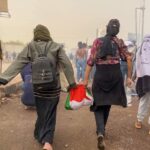
On December 9th, the Sudanese People Liberation Movement, allied with the Rapid Support Forces active in South Kordofan, issued a statement urging civilians in Kadugli and Dillinj—the two largest cities in the region—to evacuate. The two cities have dense population and IDPs communities estimated at tens of thousands. This warning came amidst ongoing shelling and drone attacks targeting civilian areas, including schools and IDP facilities. Over recent weeks, more than 150 people—most of whom are women and children—have been killed, and dozens injured. “People are desperately trying to escape to safer parts of South Kordofan or other states, but nowhere feels safe here and traveling is dangerous. We don’t know where to go,” shared a young woman in Dillinj.
At least seven women killed in an RSF drone strike on Kalogi in eastern South Kordofan, while more than forty children were reported killed during an attack on a school. The previous week, dozens of schoolchildren in Kuma were casualties of SAF drone strikes. Increasingly, women and children are being targeted by drone warfare in South Kordofan. Thousands are trapped in affected areas, facing hunger, limited access to healthcare and protection, and dangerous roads with prohibitively high transportation costs. Many women fleeing conflict zones have reported experiencing sexual violence, abuse, and exploitation. Even as they seek safety, they risk arrest, abduction, rape, or death.
Kadugli and Dillinj have experienced a tightening siege since early 2025. Local authorities and armed forces strictly control food supplies, movement, and communications. Internet and phone services are cut off, leaving residents isolated and unable to access vital information about their safety, potential evacuation routes, or financial resources. “We can wait weeks to hear news about those who left—if they arrived safely, or if they’ve been kidnapped or killed,” said a woman from Kadugli.
Local responders are facing escalating threats and restrictions, while diminishing funding jeopardizes their capacity to address this growing crisis. Women and girls are particularly vulnerable, as they have had less access to aid compared to men in these areas due to limited mobility and inability to reach safer locations where humanitarian services are more available. Immediate action from the international community is required to prevent the situation in South Kordofan from becoming another Alfashir. Humanitarian responses must be strategically planned to protect civilians, especially women and children. These plans should provide for realistic protection measures, including adequate resourcing of actions such as evacuations, negotiating safe routes, and setting up new IDP camps in accordance with potential scenarios involving increased conflict in the region in the coming days.
Recommendations:
- Urge conflicting parties to open safe corridors for civilians—especially women and children—to leave conflict zones in South Kordofan.
- Increase support to humanitarian organizations and women-led groups to address urgent needs such as food, shelter, evacuation, and protection.
- Take immediate steps to protect women and girls, including evacuation plans and focused support for displaced populations.