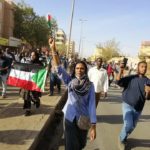
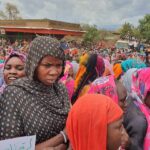
On July 21, 2025, women and girls in Kadugli city, located in South Kordofan of the Nuba Mountains, organized a protest urging the Sudanese military to release food from its storage facilities to address the city’s ongoing food shortage. Authorities detained at least eight women for two days following the demonstration. Earlier in the month, a 16-year-old girl named Emtithal was detained for over a week after attempting to photograph long queues of residents waiting to purchase sorghum in the market. The hunger crisis in South Kordofan and the Nuba Mountains has now reached an acute level. Approximately half of Kadugli’s population has left the city, while thousands remain stranded due to road insecurity and high transportation costs. The majority of those trapped are female-headed households, who are disproportionately affected by rising prices and limited access to food.
Groups of citizens who left Kadugli have not reached places that are significantly safer or better than their hometown. Many have moved to areas controlled by the Sudan People’s Liberation Movement, which itself declared a famine there last August. Others arrived in El-Obeid in North Kordofan, a city that has been under siege for two years and hosts large numbers of displaced people. The displaced face new hardships as they search for food in the war-torn Kordofan region, where fighting rages on every front and total closure is enforced by the various competing forces. This leaves the population of South Kordofan—especially women—without options, surrounded by death and hunger, as all routes to safer places, whether within or outside the country, are blocked.
Medical professionals in the city describe malnutrition levels among women and children as catastrophic. “This crisis isn’t new; Kadugli and Dillinj have been under siege for two years, worsening hunger, food insecurity, and lack of nutrition for pregnant women and children,” said a local health worker. “We have no medical supplies or food—nothing to give.”
A resident of Kadugli stated: “Currently, financial resources are not the primary concern; most markets lack goods for purchase. The Sudanese Armed Forces (SAF) confiscate all items entering the city. Food vendors are reluctant to sell during daytime hours due to safety concerns, resulting in nighttime transactions. Transporting or selling food within the city has become increasingly hazardous.” The prices are too high to match any levels of income. The kilogram of sugar reached 70.000 Sudanese pound which is around 20$ and 3 kilogram of whole sorghum is around 10$.
A resident of Kadugli stated: “Currently, financial resources are not the primary concern; most markets lack goods for purchase. The Sudanese Armed Forces (SAF) confiscate all items entering the city. Food vendors are reluctant to sell during daytime hours due to safety concerns, resulting in nighttime transactions. Transporting or selling food within the city has become increasingly hazardous.” Since the onset of conflict in 2011, the movement of food supplies has posed significant challenges in Kadugli and Dillinj. Both citizens and merchants have required authorization from military intelligence to transport even minimal quantities of food. The SAF has aimed to impose a comprehensive ban on food supplies reaching areas controlled by the Sudanese People Liberation Army.
South Kordofan faces a worsening humanitarian crisis due to territorial changes and administrative shutdowns. On June 7, RSF and SPLM-N al-Hilu forces captured Um Dehilib east of Kauda, while ongoing fighting near Al Debibat has trapped thousands. Kadugli endures heavy shelling, blockades, and restricted humanitarian access after Sudan’s Humanitarian Aid Commission suspended 33 NGOs. Roads connecting Kadugli to nearby towns are impassable, isolating communities from vital supplies. Authorities in Kadugli have targeted civil society with arrests, and food prices have surged as aid access remains limited, increasing famine risks—particularly for women and girls.
As the crisis deepens, the resilience of Kadugli’s women and girls stands as a testament to courage amidst deprivation. Each day, their struggle for sustenance and safety is a silent call to the world’s conscience—a plea for urgent humanitarian intervention and lasting peace. Without decisive action, the specter of famine will continue to cast its shadow over South Kordofan, threatening to erase fragile hopes for recovery. The stories emerging from Kadugli are a stark reminder: the time to act is now, before desperation becomes the city’s only option.