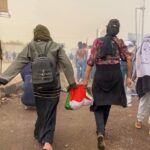
On the first anniversary of the massacre in Alfashir, the voices of survivors echoed with frustration and reflected their continuing struggle for survival. The majority of Alfashir survivors continue to live in conditions of famine and food insecurity, especially women and children. Psychological trauma disturbs their nights, and hunger rocks their days. “Every woman and every child here needs rehabilitation and psychological support. They witnessed horrendous violence, but we have very little to offer them as psychological support professionals. The needs are beyond our small capacity,” said a psychological support professional working with survivors.
The large IDP camps in Tawila, Malit, and surrounding areas are hosting over 300,000 people. These numbers are increasing every day as drone attacks and fighting continue in different areas of Darfur. The failed rainy season and famine in several areas of North Darfur, such as Almalhla, have forced thousands of IDPs to come to the already underserved camps in Tawila. “In the last couple of months, we have received dozens of families in Tawila every day,” said a local responder. The increasing pressure on limited services and resources in the areas hosting Alfashir survivors has affected access to essential lifesaving needs.
As the number of IDPs increases and funding and resources shrink, the survivors of the Alfashir atrocities are being left behind without access to dignity or justice. The international community failed the people of Alfashir twice. It did not protect them from the widely reported approaching atrocities and failed those who survived by cutting funding for basic humanitarian aid and lagging behind in providing adequate protection from future atrocities.
WFP has warned that shrinking humanitarian funding is forcing it to scale back food assistance in Sudan even as hunger and displacement deepen. In Tawila, where people displaced from El Fasher have sought safety, WFP has announced further ration cuts for approximately 950,000 people because of insufficient financing. These reductions come despite urgent needs across Darfur and risk pushing families who have already survived violence, displacement, and severe deprivation closer to catastrophe.
The international community must act now to protect civilians across Darfur from drone attacks, indiscriminate bombardment, and further atrocities. Donors must urgently provide the funding needed to restore and expand lifesaving food, nutrition, health, shelter, and psychological support for people who survived the atrocities in El Fasher. At the same time, international and regional actors must support credible, survivor-centred justice and accountability processes so that violations are documented, those responsible are held accountable, and survivors can pursue dignity, redress, and lasting protection.